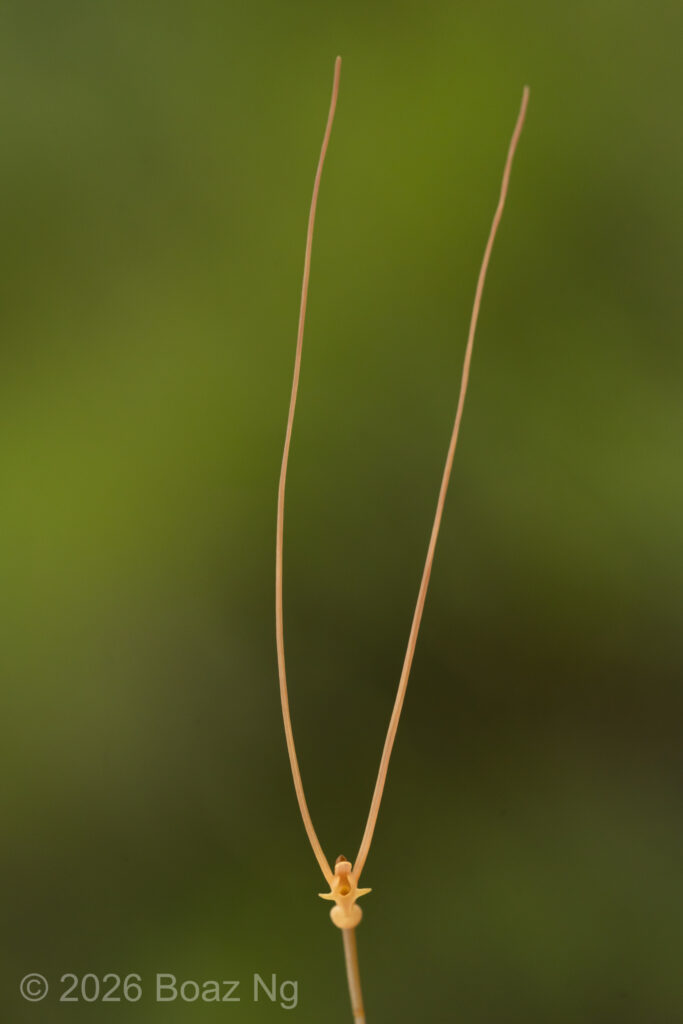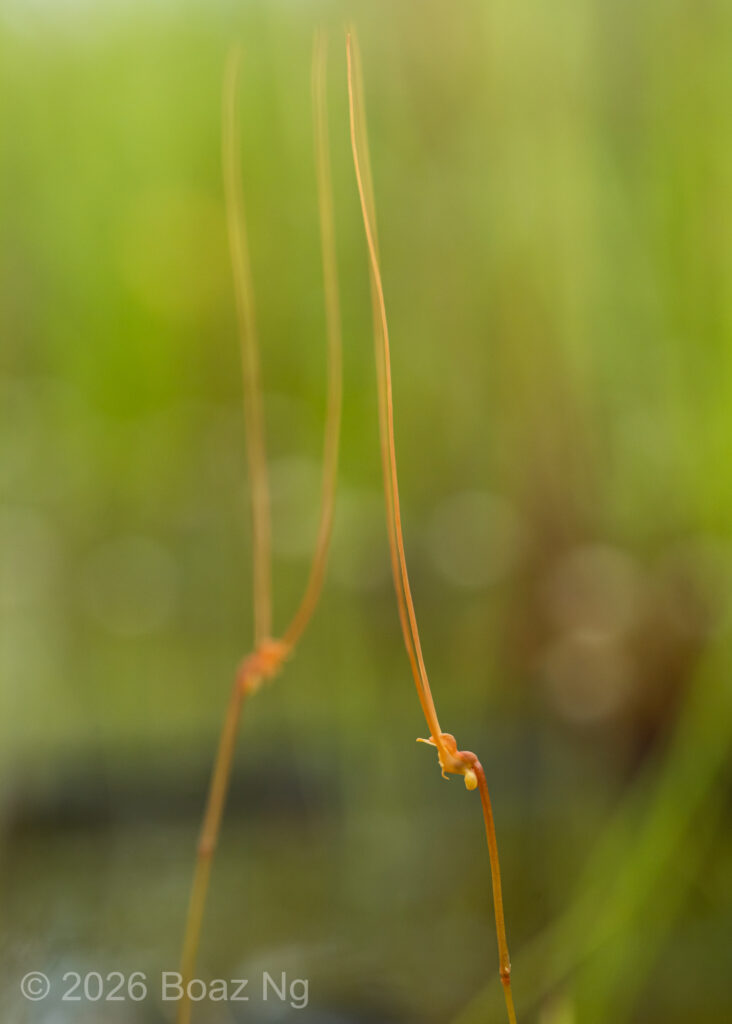
Utricularia antennifera is an antenna-bearing bladderwort endemic to the Kimberley region in Western Australia. The species is named for its long flower projections, which are reminiscent of an insect’s antennae.
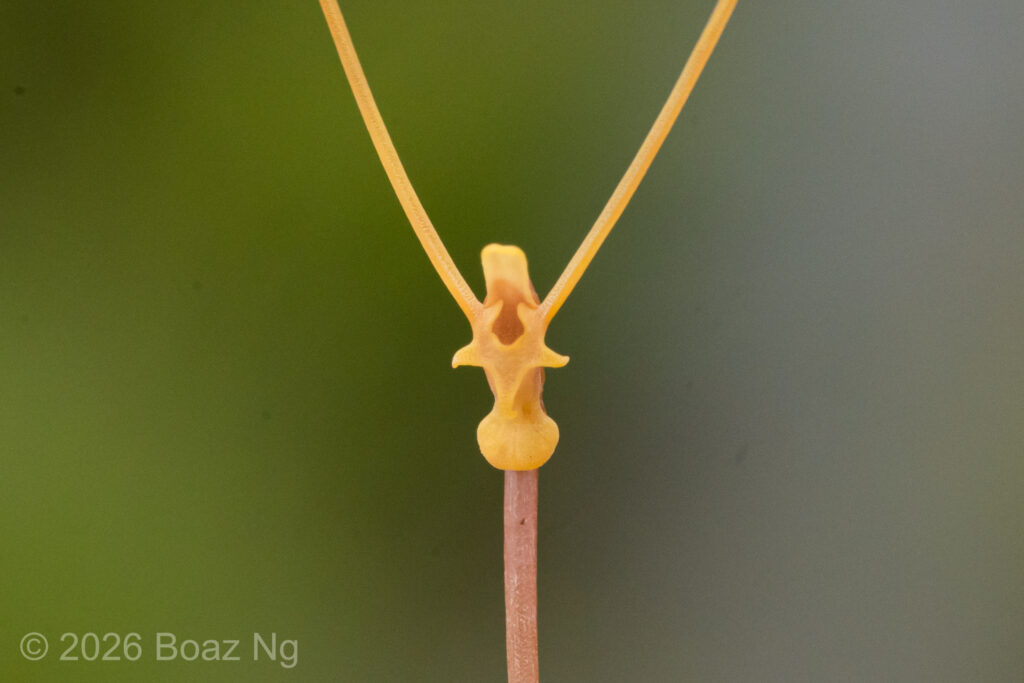
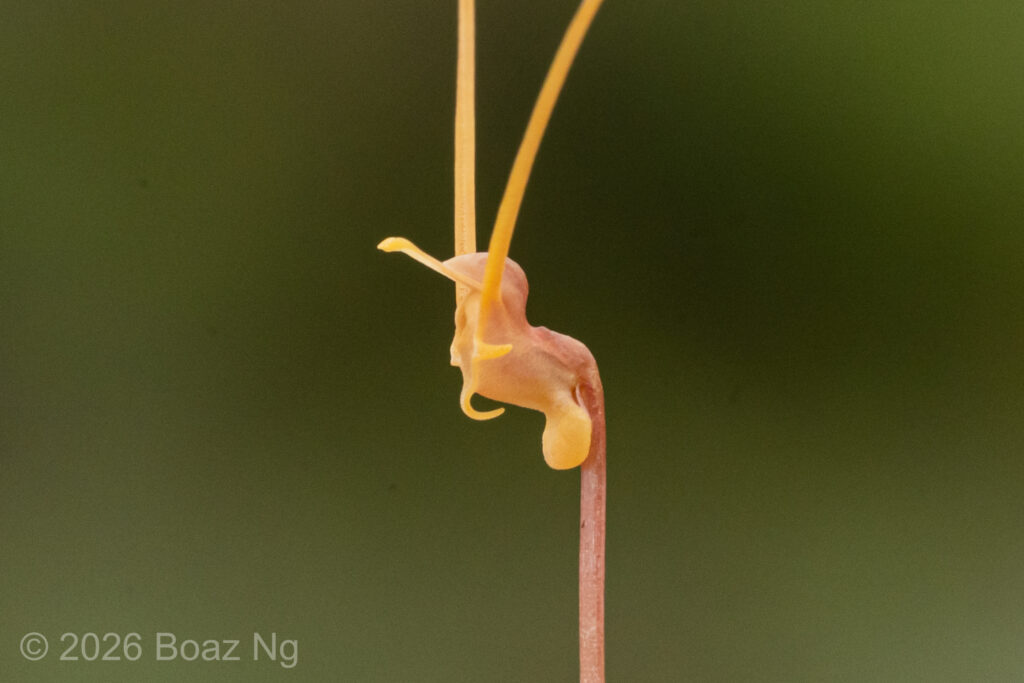
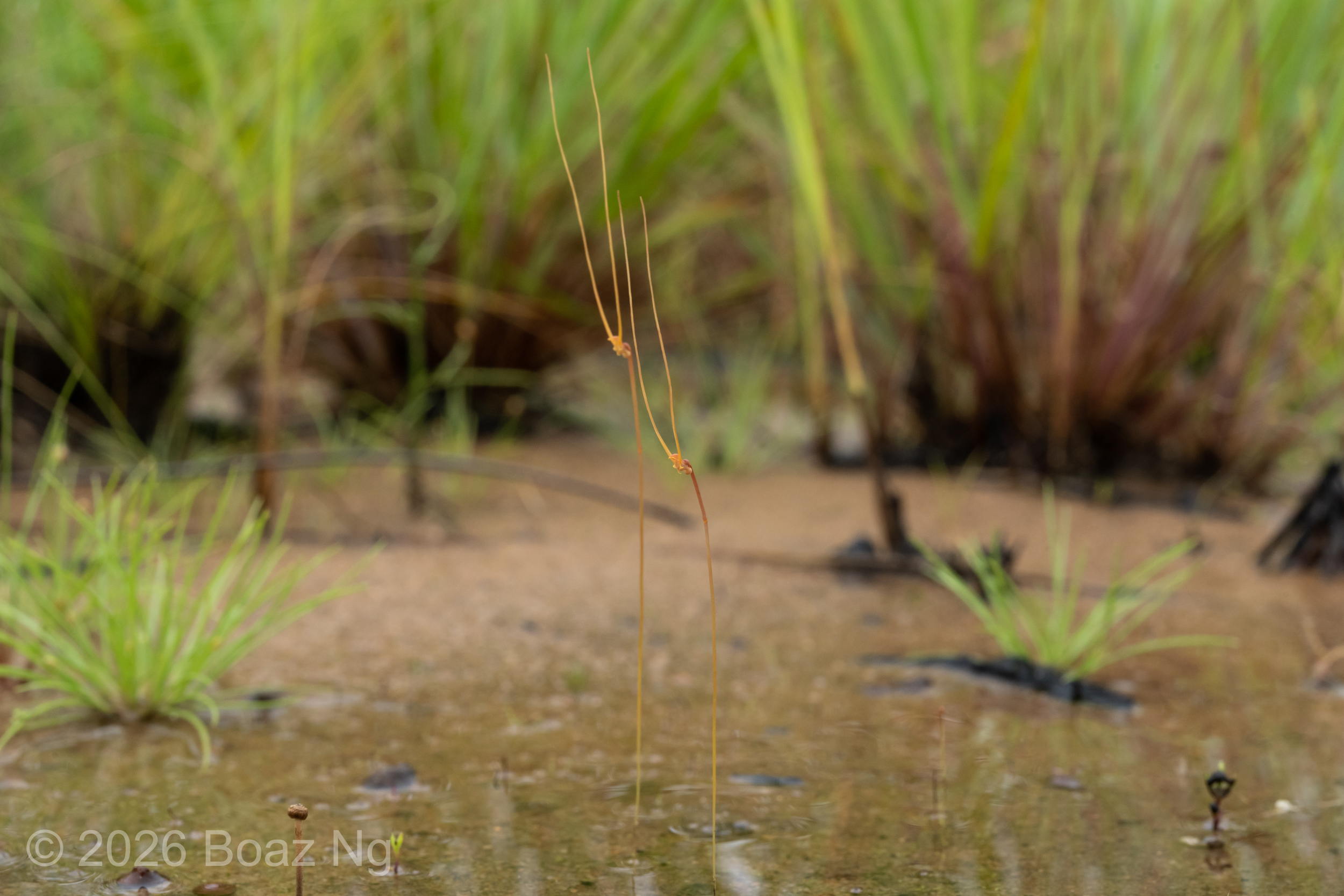
Utricularia antennifera is a small bladderwort with flowers about 2-3cm in length. Two long, thin, upwards-pointing projections emerge from the edge of the lower corolla lip. The lower edge of the corolla lip has three very short, pointed lobes that are arranged in a ‘T’ formation. The opening of the flower has an additional two inwards-pointing lobes. The upper corolla lip is simple and does not have projections. The spur is inflated to a short, round, ‘scrotiform’ structure that hangs under the corolla lobes. The flowers are a tawny orangy-yellow colour.
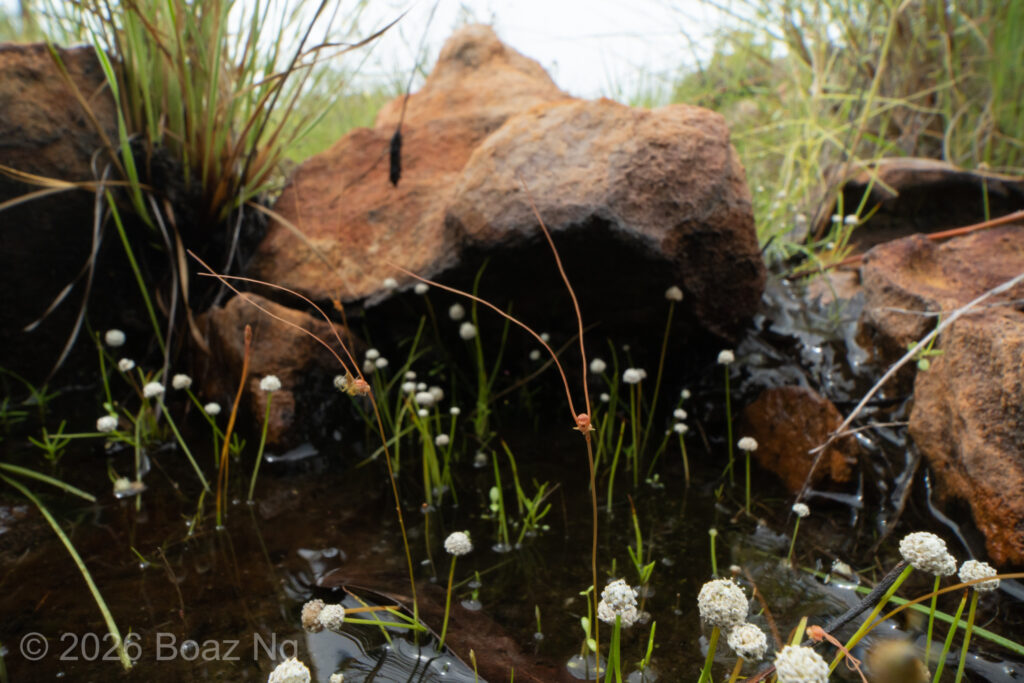
The species grows across the Northern and Central Kimberley regions in the monsoonal north of Western Australia. It is found in seepage areas atop sandstone or basalt. I observed the species north of Kalumburu where it is fairly abundant in seeps around rocky outcrop areas. It grows in niches that are usually inundated with very shallow water about 1 cm deep. Plants flower in February to April, starting towards the later half of the wet season and continuing until its habitat dries up at the start of the dry season.
Utricularia antennifera is found alongside two other antennae-bearing bladderworts, Utricularia dunlopii and U. albertiana. In terms of habitat wetness, U. antennifera occupies moderately inundated niches with around 1cm of water. U. dunlopii grows in less wet niches that often have just a thin film of water or are very damp without any standing water. U. albertiana grows in deeper water, about 5-10cm deep.
The antennae-bearing bladderworts can be distinguished by the configuration of the antennae and lower corolla lip lobes. Utricularia albertiana is distinguished from U. capilliflora and U. dunlopii by the antennae that are produced on the lower corolla lip (antennae on the upper corolla lip in U. capilliflora and U. dunlopii). The three very short lower corolla lip lobes distinguish it from the other species (three long, filiform projections in U. lowriei; one long projection in U. albertiana and U. dunstaniae).